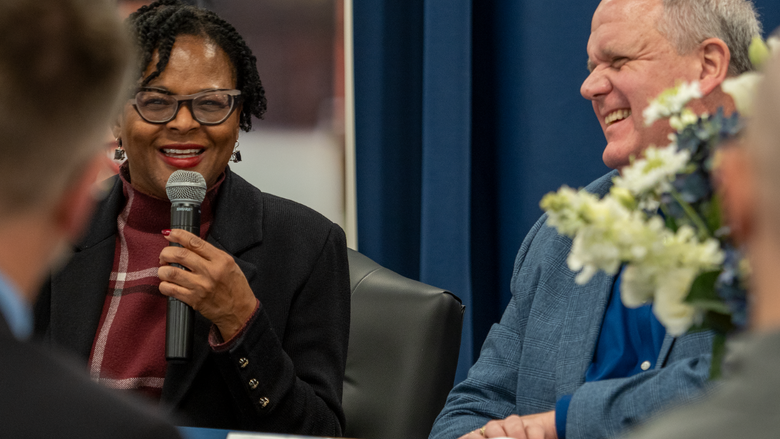
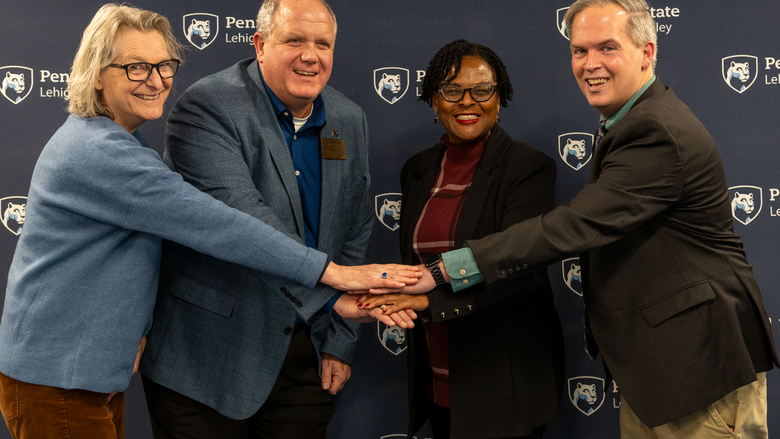
Lynda Goldstein, chancellor of Penn State Wilkes-Barre; David A. Ruth, president of Northampton Community College; Tina Q. Richardson, chancellor of Penn State Lehigh Valley; and Cory Scherer, interim chancellor of Penn State Schuylkill, left to right, were present for the articulation agreement signing ceremony held at Penn State Lehigh Valley on Tuesday, Jan. 21, 2025.
Students who fulfill transfer requirements at Northampton Community College will be admitted to Penn State's Hazleton, Lehigh Valley, Schuylkill or Wilkes-Barre campuses under an articulation agreement.
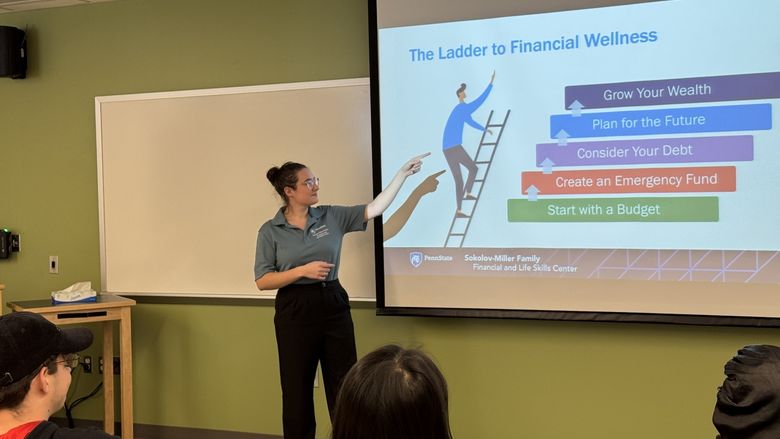
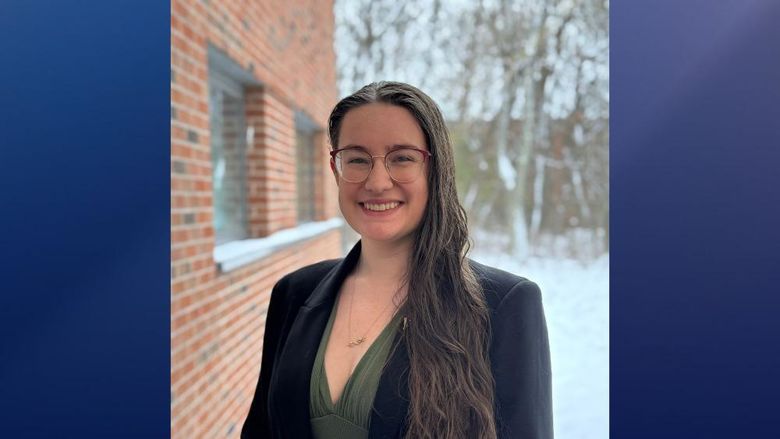
Saraiha Rossi leads a presentation on financial wellness to students at Penn State Hazleton. Through her role as a student financial ambassador, Rossi is bringing the services and resources of the University's Sokolov-Miller Family Financial and Life Skills Center to her campus community.
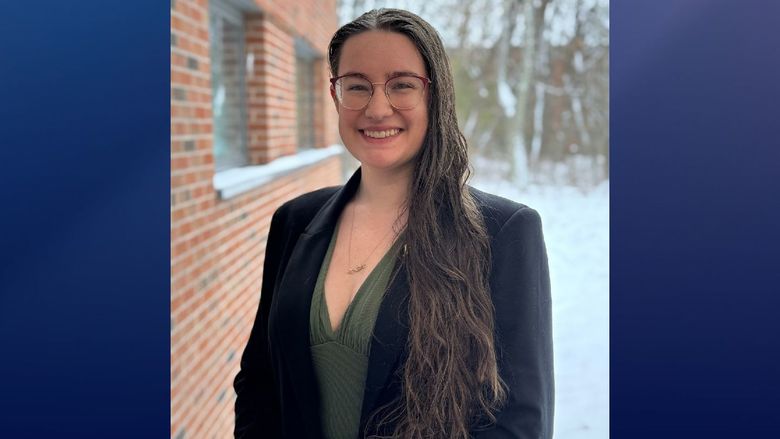
Serving as a student financial ambassador, Saraiha Rossi is bringing the services and resources of the University’s Sokolov-Miller Family Financial and Life Skills Center to the Penn State Hazleton campus community.
As part of our regular “We Are!” feature, we recognize Penn Staters who have gone above and beyond what’s asked of them in their work at the University.
As part of our regular “We Are!” feature, we recognize 16 Penn Staters who have gone above and beyond what’s asked of them in their work at the University.